I sat on a vinyl chair in that quiet hallway, the Timex ticking against my wrist. My fingers fumbled with the tape on the yellow legal-pad page. When I finally got it open, the handwriting was so shaky it looked like a child had written it. But I’d know those loops and slants anywhere.
“Deenie,” it began. “If you’re reading this, you’re likely wishing you could hit me with a cast-iron skillet. I wouldn’t blame you. But I need you to listen before you come through that door. Two years ago, when the doctor told me it was ALS, I sat in my truck in the hospital parking lot for three hours. I thought about my dad. I thought about how my mother spent the last five years of her life lifting him, cleaning him, and losing herself until there was nothing left but a tired woman in a house that smelled like bleach. I didn’t want that for you. I didn’t want your last memories of me to be a body that didn’t work and a mind that was drowning in the weight of it all. I wanted you to keep being the woman who sold insurance and went to the beauty shop. I wanted you to remember the man who warmed up your car, not the man who couldn’t hold a coffee cup. I lied and said I was tired so you would be free while you were still young enough to enjoy it. I thought if I made you a little mad, it would be easier for you to let go. But I saw you at the wedding, and I realized I was the fool. I just wanted one more night of being Harlis and Nadeen. I’m sorry I left in the morning, but I couldn’t bear to say goodbye twice. I love you, Deenie. I always have. Please don’t be too mad at an old man for trying to be a hero one last time.”
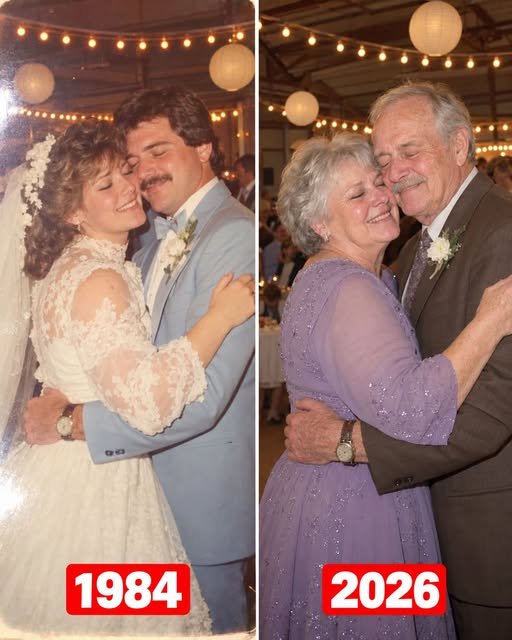
I folded the paper back up, my vision blurred by tears that felt like they’d been bottled up for two years. All the anger, all the ‘tired of me’ thoughts I’d carried, they vanished in a heartbeat. He hadn’t left me; he’d tried to save me from the very thing we’d promised each other in 1984—the ‘in sickness and in health’ part.
I stood up and walked into Room 12.
Harlis was propped up on white pillows. He was so thin his cheekbones looked like they might cut through his skin. A machine hummed beside the bed, breathing for him. When he saw me, his eyes widened, and a small, crooked smile touched his lips. He couldn’t move his arms, but his eyes were full of everything he’d said in that letter.
I didn’t say a word. I walked straight to the bed, pulled up a chair, and took his hand. It was cold, and the muscles were gone, but it was still Harlis. I leaned in and whispered into his ear, “You’re a stubborn old goat, Harlis Harbison. And if you think a little bit of work was going to make me love you less, you never knew me at all.”
He couldn’t speak much, but he whispered one word: “Deenie.”
I stayed. I didn’t go back to the beauty shop to explain myself. I didn’t care what the girls thought. I moved into that hospice house for the next ten days. I brought the Kroger mug with the chipped handle and filled it with the coffee he liked. I read him the insurance news and the local obituaries, and we watched the birds at the feeders outside his window. We didn’t talk about the divorce. We talked about the thirty-eight years before it. We talked about Kenley’s wedding and the way the DJ had played our song.
On the last night, I sat beside him and held his hand. The Timex on my wrist marked the seconds. He looked at me, his breathing shallow, and squeezed my fingers with the last bit of strength he had.
“Warm,” he whispered.
“I know, Harlis,” I said. “The car’s warmed up. We’re ready to go.”
He passed away just as the sun was coming up over the trees.
The Aftermath
The funeral was small, just like the divorce. Kenley and our son were there, and Orene finally looked me in the eye and apologized for the secret she’d had to keep. I didn’t mind. I knew why she did it.
I still live in our house. The porch light stays on every single night, just like he asked. And every morning this winter, when I walk out to my car, I stop for a second on the driveway. The car is cold now, and I have to scrape the ice off the windshield myself. But as I sit there, waiting for the engine to turn over, I put my hand on the passenger seat and I feel the warmth of thirty-eight years of mornings when I didn’t have to.
I wear his Timex every day. The band is still cracked, and I’ll never replace it. Because every time I hear it tick, I remember that Harlis didn’t get tired of me. He just loved me enough to want me to stay whole, even when he was breaking apart. And in the quiet of my kitchen, sipping coffee from a chipped mug, I know that’s the kind of love that never really signs any papers.