I peeled the tape back with my thumbnail. My hands were shaking so hard it took three tries.
The page was filled edge to edge in that crooked printing I had known for forty years, the letters leaning like fence posts after a storm.
Deenie,
If you’re reading this, you came, and I don’t deserve it, but I’m glad.
I’m going to tell you the truth now, because I lied to you for two years and I’m done.
I was not tired of you. I have never been tired of you one day in thirty-eight years.
The spring before I asked for the divorce, I couldn’t button my shirt. You remember. You said I was getting clumsy, and you laughed, and I laughed too. Then the doctor in Evansville said three letters I’d never wanted to hear. ALS. He said I had maybe two years. He said the hands go first, then the legs, then the rest.
I sat in that parking lot for an hour. And all I could think about was you.
I thought about my mother. You remember how it was with her at the end. You took her in. You quit working Fridays. You slept in a recliner for eleven months, and you never complained once, but I watched what it did to you. You came out of that grayer and thinner, and you never got your laugh all the way back.
I could not do that to you, Deenie. I could not turn you into my nurse.
So I made myself the bad guy. I figured if you were angry, you’d go on living. You’d go to the beauty shop and play cards on Thursdays and take that trip to the Smokies you always wanted. You’d never have to feed me with a spoon or lift me out of a tub. You’d remember a husband who left, and you’d be mad at him, and mad is easier to carry than grief.
I was wrong about a lot of things, but I was right about one: I could not stand for you to see me like that.
I told Orene to keep quiet. She hated it. She told me a hundred times I was making a mistake, and I told her a hundred times to hush. If she’s been dodging your calls, that’s on me, not her.
Then came Kenley’s wedding.
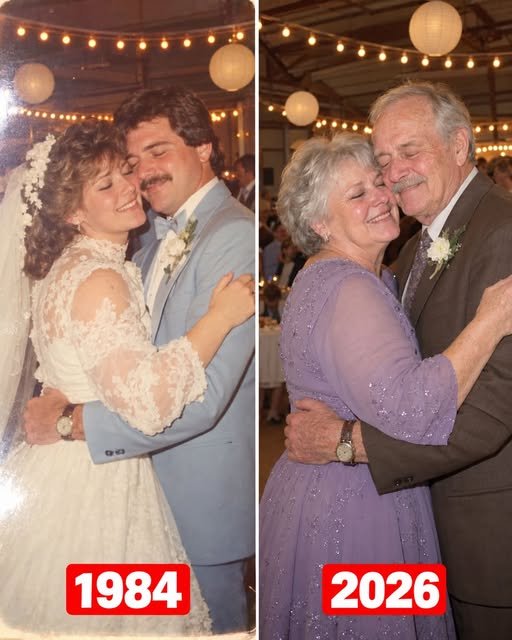
I wasn’t going to go. But I knew I had one dance left in me, maybe, and I wanted it to be with you. I wanted to hold you one more time while I still could.
That night, I meant to stay only until you fell asleep. But you rolled over and put your hand on my chest the way you always did, and I couldn’t make myself leave. I lay there till four in the morning, just listening to you breathe.
I left the watch so you’d have something of mine. I know it’s cracked. I know you wanted to replace it. I’m sorry I never let you. It was the last thing that still felt like the day we got married.
I was a coward, Deenie. I told myself I was protecting you, but some of it was protecting me. I couldn’t bear to watch your face while I got worse. That’s the truth, and I’m ashamed of it.
The papers are in a folder in the top drawer of my sister’s desk. I never touched your half of the retirement. The house is yours free and clear. I only took what I needed.
If you want to see me, I’m in Room 6, by the window. I can’t do much now but watch the birds. If you don’t want to see me, I understand, and I won’t blame you one bit.
Either way, keep the porch light on.
Yours, always,
Harlis
I read it twice. By the second time I couldn’t see the words anymore.
I folded the page along its creases and held it against my chest, and I stood in that quiet hallway and cried the way I hadn’t cried at the divorce, or the beauty shop, or any of those lonely suppers for one.
Tamsin came around the desk and put a hand on my back. She didn’t say a word. She just let me.
When I could breathe again, I wiped my face with the heel of my hand.
“Room 6?” I asked.
“End of the hall,” she said gently. “He’s awake. He’s been awake since five. He keeps asking if it’s visiting hours yet.”
I walked down that hallway with his watch loose on my wrist, passing doors and bird feeders and little paper signs. At Room 6, I stopped.
The door was open a crack. The light through the window fell across a narrow bed.
Harlis lay propped on pillows, thin as a rail, his hands resting on the blanket. He was watching a cardinal on the feeder outside. His head turned slowly, like it cost him something.
When he saw me, his whole face broke open.
“Deenie,” he said. The word was slurred and soft, but I knew it anywhere. “You came.”
“Of course I came, you stubborn old fool.” My voice cracked in half. “You think I’d let you get away with this?”
He tried to laugh. “Read it?”
“I read it.”
“Mad?”
“Furious,” I said, and crossed the room, and sat on the edge of his bed. “Thirty-eight years, Harlis. Thirty-eight years, and you decided for me. You didn’t give me a vote.”
“I know.” His eyes filled. “I was scared.”
“So was I. I was scared for two years that I wasn’t enough for you.” I took his hand. It was so light, just bones and warm skin. “I would have slept in that recliner, Harlis. I would have slept in it gladly. That wasn’t a burden. That was the marriage.”
A tear slid down into his pillow. “I didn’t know that. Or I knew it, and I couldn’t stand it.”
“Well, now you know.” I wiped his face with my thumb. “And I’m not going anywhere.”
“Deenie…”
“Don’t argue with me. I’ve had two years of silence, and I’m not wasting what’s left.” I held up my wrist. “You left your watch. A man doesn’t leave his watch unless he wants somebody to bring it back.”
He smiled, crooked and wet. “Maybe I did.”
I stayed that day, and the next. Tamsin brought me a cot, and I told her to keep her receipts, because I was staying the whole time. I fed him his supper with a spoon and he complained about the mashed potatoes, and I told him to hush. I read him the Vincennes paper out loud. We watched the cardinals. We talked about everything: the winter he warmed up my car with the heater broken, the Kroger mug, the year the creek flooded our first house.
He asked me to forgive him, and I told him I already had, but I wasn’t done being mad, and he said that was fair.
On the fourth night, he asked me to put on the song from the wedding. I held my phone up to his ear and lay down beside him in that narrow bed, careful of the wires, and we danced the only way we still could, cheek to cheek, not moving at all.
“Sorry I’m so slow,” he whispered.
“You always were,” I said.
He laughed one last time.
Harlis passed eleven days later, early in the morning, with the cardinals just starting up outside and my hand wrapped around his. He wasn’t alone for a single minute of it. Neither was I.
I buried him in his brown suit, which finally fit, because the funeral director was kind about such things. Kenley sang at the service. Orene sat beside me and held my arm, and we cried together and forgave each other and everybody else.
I didn’t put that watch back in the junk drawer. I had a jeweler in town replace the cracked band with a new leather one, and I wear it every day, loose on my wrist, ticking along.
Every winter, I still go out before dawn and warm up my own car. I set my coffee on the dash in the chipped Kroger mug.
And every night, I turn on the porch light.
Because he asked me to. And because, after thirty-eight years, I finally understood what he meant.
He wasn’t leaving the light on for himself. He was leaving it on so I’d always know the way home.