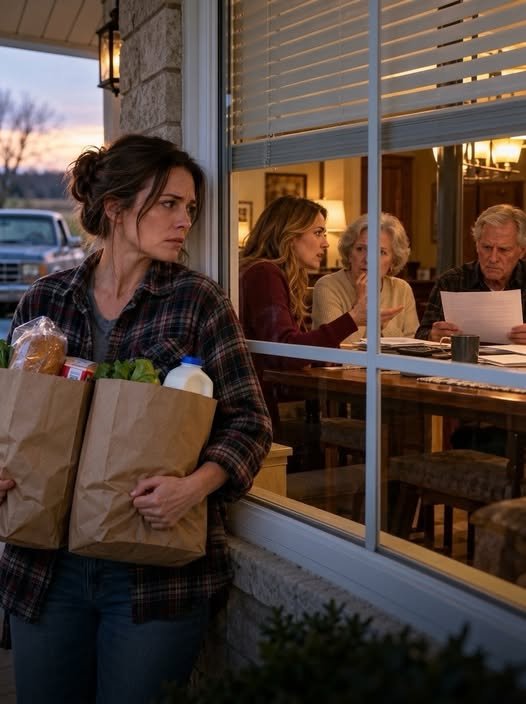
I looked at the brown folder sitting on the scarred oak table, then back at my father. The air in the kitchen felt heavy, thick with the scent of stale coffee and the ozone of an impending storm. Dad’s finger was still resting on a line item from three years ago: “$5,000 – New Baler for Fay.” I had bought that baler myself with a high-interest loan I’d spent two years paying off.
“This folder,” I said, my voice steadier than I felt, “contains the reality of the last fifteen years. But before we get to that, I want to hear Ranata’s version. Ranata, when exactly did you give me this five thousand dollars?”
Ranata didn’t look up. She was picking at a loose thread on her expensive cashmere sweater. Desmond, her husband, shifted his weight by the sink, his eyes darting between the papers and the door. The silence stretched until it was painful.
“I… I must have misremembered the specific month,” Ranata whispered. “It was a lot of small amounts, Fay. I was just trying to help you. You were always so stressed.”
“I was stressed because I was working eighty hours a week to keep a farm running while you were telling everyone I was a charity case,” I replied. I opened the brown folder and pulled out my own records—fifteen years of bank statements, tax returns, and bill of sale documents. I laid them out beside Dad’s list. It was like looking at two different universes. In one, I was a failing dependent. In the other, I was a self-made woman who had never missed a property tax payment.
Dad began to cross-reference the dates. The room went silent again, except for the sound of flipping paper. As he moved through the pages, his face transformed from confusion to a deep, dark fury I had rarely seen. He reached the bottom of the fourth page—the total.
“Four hundred and eighty thousand dollars,” Dad said, his voice a low growl. “Over fifteen years, Ranata, you told us Fay needed nearly half a million dollars. We took out a second mortgage. We dipped into our retirement. We lived frugally so our ‘struggling’ daughter wouldn’t lose her land. Where is the money?”
Ranata finally looked up, and for the first time, the mask of the perfect, successful sister was gone. There was no warmth left, only a sharp, cornered desperation. “Do you know what it’s like?” she spat, looking at Mom and Dad. “To be the ‘successful’ one? To have to maintain a certain lifestyle? Desmond’s firm had a bad year. Then another. We had private school tuitions. The club fees. I couldn’t just tell you we were failing while Fay was out there playing pioneer woman!”
“So you stole from your parents and blamed it on your sister?” I asked.
Desmond finally spoke, his voice thin. “It wasn’t stealing. It was… an advance. We were going to pay it back once the market turned.”
“The market didn’t turn for fifteen years?” I countered.
Mom was crying now, quiet, jagged sobs. “We would have helped you, Ranata. If you were in trouble, you just had to ask. Why did you have to make Fay the villain of your story?”
“Because Fay didn’t care!” Ranata screamed, standing up. “Look at her! She’s fine with her old truck and her dirt. She didn’t need the money, and you would have never given it to us if you knew we were just ‘living beyond our means.’ You only give when there’s a tragedy. So I gave you one.”
I felt a strange sense of detachment. The sister I had looked up to, the one who I thought was just a bit arrogant, had spent a decade and a half constructing a lie that kept me isolated from my parents. Every lecture I’d received about ‘responsibility’ had been fueled by her theft. Every time Dad looked at my truck with disappointment, he was actually looking at the money he thought he’d sent to replace it—money that was actually paying for Ranata’s country club membership.
“Well,” I said, sliding the final document from my folder across the table. “The tragedy is over.”
Dad picked up the page. It was the final closing statement from the land sale. He read the number at the bottom out loud, his voice barely a whisper. “Thirty-nine million dollars.”
Ranata froze. Desmond stepped forward, his eyes widening. “Thirty-nine? For eighty acres of dirt?”
“It’s not just dirt anymore,” I said. “It’s the site of the new regional logistics hub. I’ve been negotiating the sale for eighteen months. The money hit my account three days ago.”
Ranata sank back into her chair. The ‘successful’ sister was now sitting in a kitchen where her younger, ‘struggling’ sibling was worth more than her entire social circle combined. But the money wasn’t the point. I looked at my parents.
“I’m going to pay you back,” I said. “Every cent Ranata took. I’ve already had my accountant draft the transfers. The second mortgage will be cleared by Monday. Your retirement fund will be tripled.”
“Fay, no,” Mom started, “that’s your money…”
“It’s family money now,” I said, looking directly at Ranata. “But here’s the disclosure, the part you need to understand. I’m paying them back because I love them. And because I can. But I’m also buying the farm property back from the development group’s residential carve-out. I’m staying on ten acres. And Ranata? You’re never setting foot on that land again. You and Desmond have thirty days to figure out how you’re going to explain your ‘sudden’ financial downturn to your friends, because the bank of Mom and Dad—and the bank of Fay—is officially closed.”
Ranata tried to speak, to offer one last excuse, but Dad held up a hand.
“Leave,” he said. “Both of you.”
After they left, the kitchen was quiet again. I stayed with my parents until the sun started to come up. We didn’t talk about the millions. We talked about the fifteen years of missed conversations. We talked about the baler, the truck, and the early mornings.
As I walked out to my old pickup in the driveway, the morning air was crisp and smelled of damp earth. I pulled my phone out and saw a message from Ranata, sent minutes ago: “You think you’re better than me now? Just because you got lucky with some dirt?”
I didn’t reply. I deleted the message and blocked her number. I climbed into my truck, the engine turning over with its familiar, reliable roar. I had thirty-nine million dollars, my parents back, and ten acres of my own land. Ranata was right about one thing: I was stubborn. And for the first time in my life, that stubbornness had paid off in ways money could never buy. I drove toward the farm, ready to watch the sunrise over the only dirt that had ever truly mattered.