The surgery lasted four long hours.
During the wait, Mom tried repeatedly to fill the silence. She asked about my job, where I was living, and whether I was still seeing Clare. I answered her in short, polite sentences, revealing nothing about our house in Eagan, our marriage by the lake, or the baby girl due in three months. I kept my life protected behind a wall she had helped build.
Scott sat across the room, completely silent, tapping his foot against the linoleum.
Around 2:30 p.m., the surgeon stepped into the waiting room. The procedure had been successful in relieving the immediate swelling, but the damage was extensive. Dad was alive, but the stroke had left him severely paralyzed on his right side, unable to speak, and facing months of intensive, round-the-clock rehabilitative care.
When we were allowed back into his recovery room, Dad was conscious. His left eye was open, darting around the room until it landed on me standing near the door.
My mother rushed to his bedside, clutching his left hand. “Roger, look… Ben came. He’s here.”
Dad made a low, frustrated choking sound in his throat. His face contorted as he tried to speak, but only broken syllables came out. His left hand twitched against the blanket.
Scott stepped forward, his voice shaking. “Dad… Ben handled everything with the doctors. He signed the papers.”
My father looked at me. For the first time in my life, there was no judgment in his eyes, no quiet dismissal, no comparison to Scott. There was only raw helplessness and a desperate, unspoken need.
I walked slowly to the side of his bed and looked down at him.
“The surgery went well, Dad,” I said, keeping my voice calm and even. “The doctors say you’ll need a long time in rehab, but the immediate danger is over.”
He stared at me, a single tear escaping the corner of his left eye, rolling down into his gray stubble. He opened his mouth, trying desperately to shape a word—an apology, a thank you, or perhaps a plea for me to stay.
I placed a quiet hand on the edge of his mattress, looking at him, then at Mom, and finally at Scott.
“I came because Mom called and you needed someone to handle the medical forms,” I said softly, ensuring every word was clear. “I signed the paperwork so you’d have a chance to recover. But I’m not staying.”
Mom gasped, stepping toward me. “Ben… what are you talking about? He needs us now! We need to be a family!”
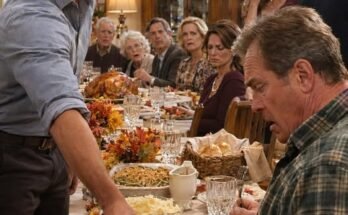
“We aren’t a family, Mom,” I said, looking her directly in the eyes without a trace of anger. “Dad made that clear three years ago at your dining room table. You sat there in silence and agreed with him. Scott laughed. You didn’t reach out when I moved, when I got married, or when I built a life. You only called me at two in the morning because the son you favored couldn’t step up when things got hard.”
Scott flinched, dropping his head in shame. Mom opened her mouth to argue, but no words came out. She looked at me, then at her incapacitated husband, realizing that the bridge had been burned beyond repair years ago.
“I have my own family now,” I continued gently. “Clare and I are expecting a daughter in three months. Her name is Margot. And I am going home to be the father she deserves.”
I stepped back from the bed. My father watched me, his left eye wide with a profound, crushing sorrow, realizing that he had traded away his relationship with his youngest son for a pride that could no longer save him.
“Goodbye, Dad,” I said.
I turned and walked out of the hospital room, stepping into the bright afternoon sunlight of Cedar Falls.
I got into my car and started the engine. As I drove north on Highway 35 back toward Eagan, the heavy weight I had carried since childhood—the desperate need for my father’s approval, the ghost of that cold dining room table—finally vanished in the rearview mirror.
Two hours later, I pulled into the driveway of our house. Clare met me at the front door, stepping into my arms. I held her close, feeling the quiet strength of the life we had built together.
I was finally home.