For nearly an hour, Evelyn sat with me in the dim kitchen while I read through every page of Mary’s letter. She detailed everything—the secret appointments, the quiet moments of terror she hid behind her bright laughter, and the overwhelming love she felt for the two little lives growing inside her.
“I knew my time was limited, David,” she wrote on the third page. *”Even without the pregnancy, the doctors gave me ten years at most before my valve would give out completely. I chose to trade those uncertain years for something real. Something that would carry our love forward long after I’m gone. Do not resent my mother for keeping this secret; I gave her no choice. And do not resent yourself. When you told the doctor to save the babies, you weren’t betraying me—you were executing my final wish.”*
I looked up at Evelyn. “Why didn’t you stop her?”
“I tried,” Evelyn said, her voice shaking with old grief. “I begged her on my knees to tell you, to consider an early termination when the strain became obvious. But you know how headstrong Mary was. She looked me in the eye and said, ‘If I terminate this pregnancy, I will die inside anyway. At least this way, David gets to have the family we dreamed of.'”
Evelyn walked over to the laptop sitting on my desk, plugged in the USB drive, and pressed play on the single video file stored inside.
The screen flickered to life, revealing Mary sitting in our half-finished nursery. She was wearing her oversized gray sweatshirt—the same one sitting unwashed in the hospital bag upstairs. Her face was slightly pale, but her eyes were full of warmth.
“Hi, David,” her recorded voice filled the quiet living room. “If you’re watching this, Evelyn finally gave you the envelope. I’m sorry for keeping this from you, my love. I know you’re angry, and you have every right to be. But I need you to do something for me.”
She leaned closer to the camera, resting her chin in her hand.
“I need you to stop living in that hospital room. I need you to look at our daughters—give them the names we argued about, even if they match—and teach them how to laugh the way you taught me. Don’t let my death become the shadow they grow up under. Tell them about me, but don’t let grief consume the life we built.”
The video played for twenty minutes. She spoke directly to our twin girls, telling them stories about how their father and mother met, how much we loved each other, and how proud she was of the future she knew we would build.
When the screen went black, the silence in the house didn’t feel heavy anymore. For the first time in three months, the air felt clear.
I stood up from the floor, wiped my eyes, and looked at Evelyn.
“They’re awake,” I said, hearing a soft coo coming from the baby monitor.
Evelyn stood up, her shoulders relaxing for the first time since she walked through the door. “Can I see them?”
“Of course,” I said. “They need their grandmother.”
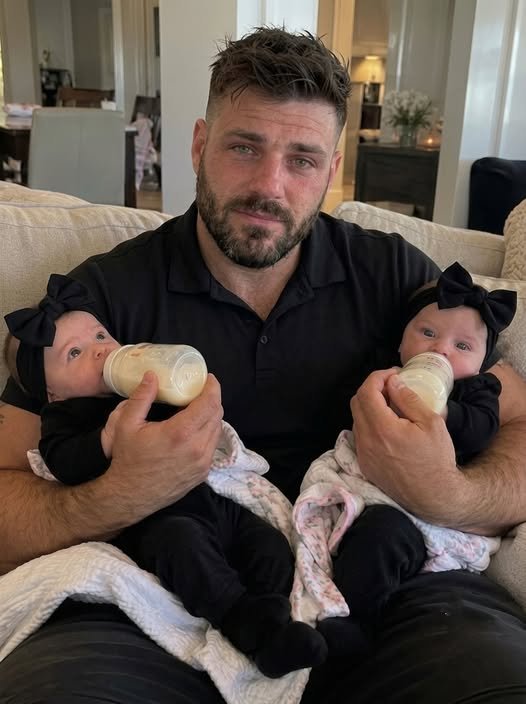
We walked into the nursery together. I leaned over the cribs and lifted our daughters into my arms—one in each arm, cradled against my chest.
I looked down at their tiny, perfect faces. For ninety days, I had looked at them and felt only guilt and phantom loss. But looking at them now, through the truth Mary had left behind, I saw her strength, her conscious sacrifice, and the boundless love that had brought them here.
“This is Lily,” I said, holding the first twin closer to Evelyn. “And this is Clara. Mary picked the names out months ago.”
Evelyn smiled through her tears, reaching out to gently touch Lily’s small fingers.
I took a deep breath, feeling the weight that had been crushing my chest finally begin to lift. I wasn’t cured of the pain, and the grief would stay with me for the rest of my life. But I was no longer eating myself alive. I had a promise to keep, two daughters to raise, and a legacy of love to carry forward.