“Thank you for telling me,” I said. “None of this is your fault. Not one piece of it.”
Sofia nodded, but she was watching my hands, as if waiting for me to explode. I didn’t. I took out my phone and said, “I’m going to record you. Only if you want me to. A judge will need to hear it in your own words.”
She thought about it. Then she straightened her shoulders, exactly the way her mother used to, and said, “Yes.”
Her statement took forty minutes. I photographed her arms in the morning light with a ruler beside the marks, the way I’d once seen an inspector document cargo damage. Then I called my sister Marisela, a nurse in Guanajuato, and she drove up before noon. She examined Sofia, wrote everything down, and told me quietly in the hallway, “Gabriel, these are weeks of injuries, not days. Take her to the hospital today, and don’t wait for Sunday.”
We went. A pediatric doctor documented every mark and filed the report required by law. A social worker from the DIF family services office sat with Sofia for an hour. When she came out, she told me, “Señor Torres, your daughter is a very credible witness. She’s also very brave.”
That was when I went to the bedroom.
I had never searched Patricia’s things in four years of marriage. I had trusted her. But that afternoon, with Marisela keeping Sofia company downstairs, I opened the closet in the master bedroom and found a locked fireproof box on the top shelf. It took me twenty minutes and a screwdriver.
Inside was Sofia’s phone, switched off, with a sticky note that read Do not return. Beneath it lay a stack of school letters, unopened, addressed to me. The teachers had written three times, worried about Sofia’s absences and her weight. Patricia had hidden every one.
Beneath those was a green notebook in Patricia’s handwriting. It was a ledger, and for a moment I didn’t understand it. Then I did.
Elena’s life insurance had paid out a sum I’d placed in a savings account for Sofia’s education, with Patricia listed as a co-signer so she could help me manage it. The notebook recorded withdrawals, month after month, for two years. Beauty treatments, a used car for Patricia’s sister, Bianca’s private school tuition. More than half the account was gone. Next to each entry Patricia had written a justification, as though practicing what she would say if I ever asked.
The last thing in the box was a bundle of photographs. They were Elena’s, from our wedding, from Sofia’s baptism. Patricia had cut Elena out of every one.
I sat on the edge of the bed, holding my first wife’s severed smile, and for the first time in two days I came close to breaking. Then I heard Sofia laugh at something Marisela said, a small, rusty laugh, and I put the photographs in an evidence bag and kept moving.
On Monday, a lawyer named Lic. Fernanda Salcedo took our case. She was brisk and unsentimental, and she watched my recordings twice without changing expression. “You did everything right,” she said. “You documented, you didn’t confront, and you got medical evidence the same day. Most people lose that evidence in the first panic.”
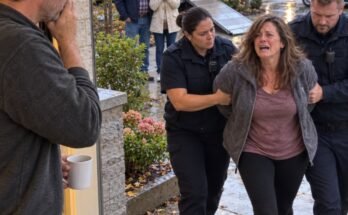
The Fiscalía opened an investigation for domestic violence against a minor, patrimonial fraud, and illegal retention of a minor’s property. A judge issued a protection order the same week, barring Patricia and her relatives from contact with Sofia. When they flew back from Cancún on Sunday evening, my brother-in-law and two officers were waiting at the house. Patricia, sunburned and smiling, was holding a duty-free bag. The smile disappeared when she saw Sofia’s empty chair and the officers’ folders.
She tried everything. First she said Sofia was a liar. Then she said the bruises came from clumsiness. When the officers produced the notebook, she claimed the withdrawals were “household expenses.” Her mother tried to scream over the officers, and her sister threatened to sue.
Bianca was the one who cracked. She was sixteen and frightened, and when the social worker interviewed her alone, she admitted everything: the hitting, the humiliation, the way Patricia had taught her it was acceptable because “Sofia is nobody’s priority.” Her own parents, who had sent her to live with us, were horrified. They took custody of her and enrolled her in counseling, and I made it clear to Sofia that Bianca’s part would be handled through the juvenile system, not out of revenge.
The case took eleven months. Patricia was convicted of family violence, child neglect, and fraud against a minor’s assets. The court ordered full restitution from her and her accomplices, and it sentenced her to four years in prison, with a permanent bar from any custody or guardianship role. The recovered money returned to the account in Sofia’s name, now controlled by a court-appointed trustee until she turned eighteen.
I missed two months of freight routes during the trial, and then I quit the long hauls altogether. A friend got me on at a local distribution center, regular hours, home every night by six. We lost income, but we got something better.
Healing was slower than any court case. Sofia started therapy with a gentle psychologist named Dr. Valdivia. For months she flinched when doors slammed. She hoarded food in her room, small things like crackers and granola bars, and I never said a word about it. I simply left snacks within reach and let her learn on her own that the supply would never run out. Some nights I woke to find her sitting at the kitchen table in the dark, and I would sit with her until she was ready to sleep.
On the first anniversary of that night, I woke at five and made oatmeal pancakes, the way Elena used to. I put two plates on the table, and Sofia came in, rubbed her eyes, and sat down in her usual chair without hesitating.
“Dad,” she said, “do you remember what you told me that morning?”
“I told you a lot of things.”
“You said none of it was my fault.” She looked at her plate, then up at me. “I didn’t believe you then.”
“And now?”
She smiled, a real one, and it reached her eyes. “Now I do.”
On her seventeenth birthday, we threw the party she never got. There was a cake with her name on it, candles I bought myself, and twelve friends crowded around our small table, elbow to elbow, laughing. I stood in the doorway and watched my daughter blow out the flames.
She looked up through the smoke and found me, and I held her gaze.
No one stood at the back of the room anymore. Everyone had a seat.