“Jet?” Cresa called again. “Honey, come back down. We should talk about this.”
I took a screenshot of the empty balance. Then another of the transaction log. Then I went downstairs, because I wanted to see their faces when I said it.
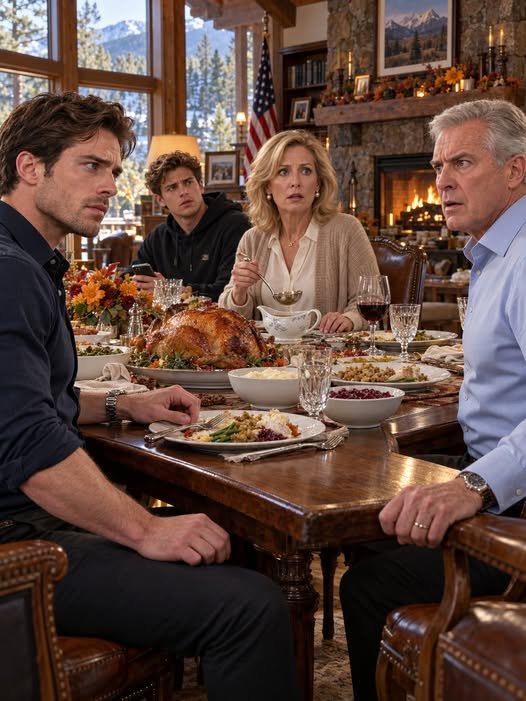
They were still at the table. The turkey had gone cold, and nobody had touched the pie.
“Who used the emergency access?” I asked.
Dad set his napkin down. “It’s family money, Jet.”
“It was my money. Whose phone got the verification code?”
Cresa’s face tightened. “Your father’s. And mine. You listed us.”
“I listed you for emergencies if I couldn’t be reached.” I held up my phone. “I answered every call you made for three weeks. I was reachable the whole time.”
Bod finally spoke, his voice small. “Wait. What surgery? What money?”
Nobody answered him. I sat down across from my brother and looked at his hands, still swollen at the knuckles, one finger curled slightly inward now.
“It was yours, Bod,” I said. “The surgery. The fund. All of it.”
He laughed, the way people laugh when they’re hoping it’s a joke.
“Eleven months ago, you fell asleep on my couch,” I said. “Your fingers were so swollen you flinched when I touched them. I took you to Dr. Ror the next morning and told you it was a routine check for your sponsors. You remember the blood work?”
He nodded slowly.
“It wasn’t routine. You have an aggressive inflammatory arthritis, the kind that destroys joints if it isn’t treated early. Dr. Ror found erosion already starting in your right hand and wrist. There’s a window to treat it, including a procedure to repair the damage before it becomes permanent. The hospital wanted a deposit before they’d schedule it. I’ve been saving for that deposit ever since.”
“You never told me,” Bod whispered.
“You’d have refused to look weak. And I knew if I told Dad and Cresa, you’d get a lecture and a performance.” I looked at my father. “So I told them I needed a minor procedure. I thought if they believed it was mine, they’d treat the appointment letter with care.”
Cresa had gone gray. “The appointment letter said Jet Armmitage.”
“Because the fund was in my name,” I said. “The patient on the file is Bod. I put him down as a secondary contact, with me as the guarantor. You’d have seen his name on page two if you’d read it.”
Nobody said anything. Dad stared at the tablecloth. Cresa’s hand covered her mouth.
“You spent my brother’s surgery on his birthday party,” I said. “A party that, if the surgery doesn’t happen, he may never be able to hold a camera through.”
Bod stood up so fast his chair fell over.
“How much?” he asked our father. “How much did you take?”
“Forty-one thousand,” Dad said finally. It was the first time all evening his voice sounded old. “The lodge was twenty-six. The fireworks and the guest flights made up the rest. We thought it was your savings account, Jet. We thought it was extra.”
“It was extra,” I said. “Extra for someone who needed it. That’s what extra means.”
Bod walked to the window and stood with his back to us, shoulders shaking. Cresa started to rise, and he said, not turning around, “Don’t.”
That night I called the bank’s fraud line. The representative was kind and tired and very precise.
“The emergency provision is intended for medical or unreachable-owner situations,” she said. “Using it to fund a private event, when you were demonstrably reachable, violates the terms. If you file a dispute and a police report, we can investigate it as unauthorized access.”
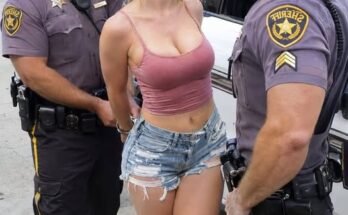
I sat on the guest bed, looking at the quilt I’d slept under every Thanksgiving. I thought about my father in handcuffs and Cresa in a courtroom, and I thought about Bod’s hand, closing slowly, a little less each month.
Then Bod knocked and came in without waiting. His eyes were red.
“Don’t file it,” he said. “Not yet. Let me try something.”
“Bod.”
“Please. I need to fix some of it myself. I’ve been a stupid kid hiding behind a camera. I want to do one thing right.”
I almost said no. But I looked at him, and he looked like the little brother I used to carry on my shoulders, and I said, “You have one week.”
He used it better than I’d imagined.
He posted a video, unedited and shaky, no filters. He showed his hands. He explained the diagnosis, the surgery, and what the money had been spent on. He did not blame our parents. He said, “This is what happens when we perform instead of ask.”
It was seen four million times in five days. Brands that had never returned his calls wrote to him. A sports medicine foundation offered a grant. The lodge in Sedona, embarrassed by the coverage, refunded nineteen thousand dollars of the deposit. Two of the guest performers returned their fees. Dad liquidated a retirement account and wrote me a check for the remaining balance, sitting at the kitchen table with a pen that kept skipping.
He didn’t say sorry. But when he handed me the check, he said, “I read page two of the letter last night. Twice.”
I decided that was something.
The surgery happened in January. Dr. Ror’s team repaired the damaged joint in Bod’s right hand, and a rheumatologist began the long, careful treatment that would keep the arthritis quiet. The hospital said we’d caught it in time, with perhaps a month to spare.
I sat in the waiting room for four hours with a cold coffee. When the surgeon came out, she said, “Good news. He’s going to keep full use of that hand.”
Cresa wept into her scarf. Dad stood in the corner, small and silent.
Bod woke groggy and grinning, his hand in a thick white cast. “Hey,” he said, when he saw me. “Did you pay for this?”
“Everyone paid for it.”
“I’m paying you back,” he said. “Every cent. I mean it.”
“I know.”
He did, over the next two years, in monthly transfers and an occasional awkward text. Dad quietly started going to the hospital to sit with Bod at infusion appointments. Cresa learned to ask questions before making decisions. It didn’t fix everything. It rarely does.
The next Thanksgiving, I flew into Flagstaff with a bottle of wine, as always. Bod met me at the door. His hand was scarred but steady, and he held out a plate.
“I cooked,” he said.
The turkey was dry. The gravy was lumpy. Nobody said a word, and we ate every bite.
Halfway through dinner, Dad cleared his throat. “I’d like to say something.”
We waited.
“Jet,” he said. “You were dependable your whole life, and we took it for granted. I’m sorry. I’m sorry that it took almost losing your brother to see it.”
I looked at him for a long time. Then I passed him the potatoes.
“Thank you for asking about the appointment this year,” I said.
He smiled, tired and genuine, and for the first time, no one at that table was performing.