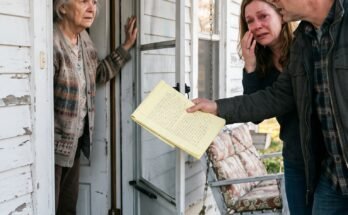
I called the bank the next morning. My hands were shaking, which embarrassed me, because I was a grown man holding a piece of paper and acting like a kid who had stolen something.
The woman who answered put me on hold for a long time. When she came back, her voice had changed. “Mr. Harper, this check is valid. The account it was drawn on belongs to Eleanor Harper, and the funds are fully available. Would you like to deposit it?”
“Is there… is there a mistake? She’s lived on a pension for nine years.”
“I can’t discuss her other accounts,” she said. “But I can tell you the check will clear.”
I thanked her and hung up without depositing anything. Then I did something I hadn’t done in years. I called my grandmother’s neighbor, a retired rancher named Walt Briggs, whose number was taped inside her kitchen cabinet. I’d seen it while fixing the hinge.
“Daniel,” he said. “I was hoping somebody in that family would call.”
“Is she all right?”
He was quiet for a moment. “She’s been seeing a doctor in Billings since October. She told me not to say anything. I figure she’d forgive me now.”
I was in my car in twenty minutes. I did not pack. I did not call my school. I just drove, seven hours again through the same white highways, and the whole way I heard her voice on the porch. I’ll be waiting.
She was in bed when I arrived, propped against two pillows, a cup of tea untouched on the nightstand. She looked at me in the doorway and closed her eyes.
“Walt told you,” she said.
“Why didn’t you?”
“Because you would have come. And I wanted to know whether you would come without knowing.” She opened her eyes. “You did. You came for Christmas and you stayed. And you came back today. I only needed to see it once, dear. I’ve seen it three times.”
I sat beside her and took her hand. It weighed almost nothing.
“The check,” I said. “Grandma, where did this money come from?”
She smiled, and for a moment she looked like the woman in the old photographs, straight-backed beside Grandpa Walter. “Your grandfather and I never spent anything. We bought this land in 1971 for almost nothing. Forty years later, a gas company wanted the mineral rights. Then a wind developer wanted the ridge. Walter invested what came in, and he was a very careful man. I just never stopped being careful after he died.”
“How much is there?”
“A good deal more than six million.” She said it so plainly that I almost missed it. “I’ve never needed it. I needed people. That was the part I couldn’t buy.”
Over the next two weeks, I learned the rest in pieces, between her naps and the hospice nurse’s visits. She had planned everything. Her attorney in Sheridan, a brisk woman named Ms. Lindqvist, came to the cabin and laid it all out for me at the kitchen table.
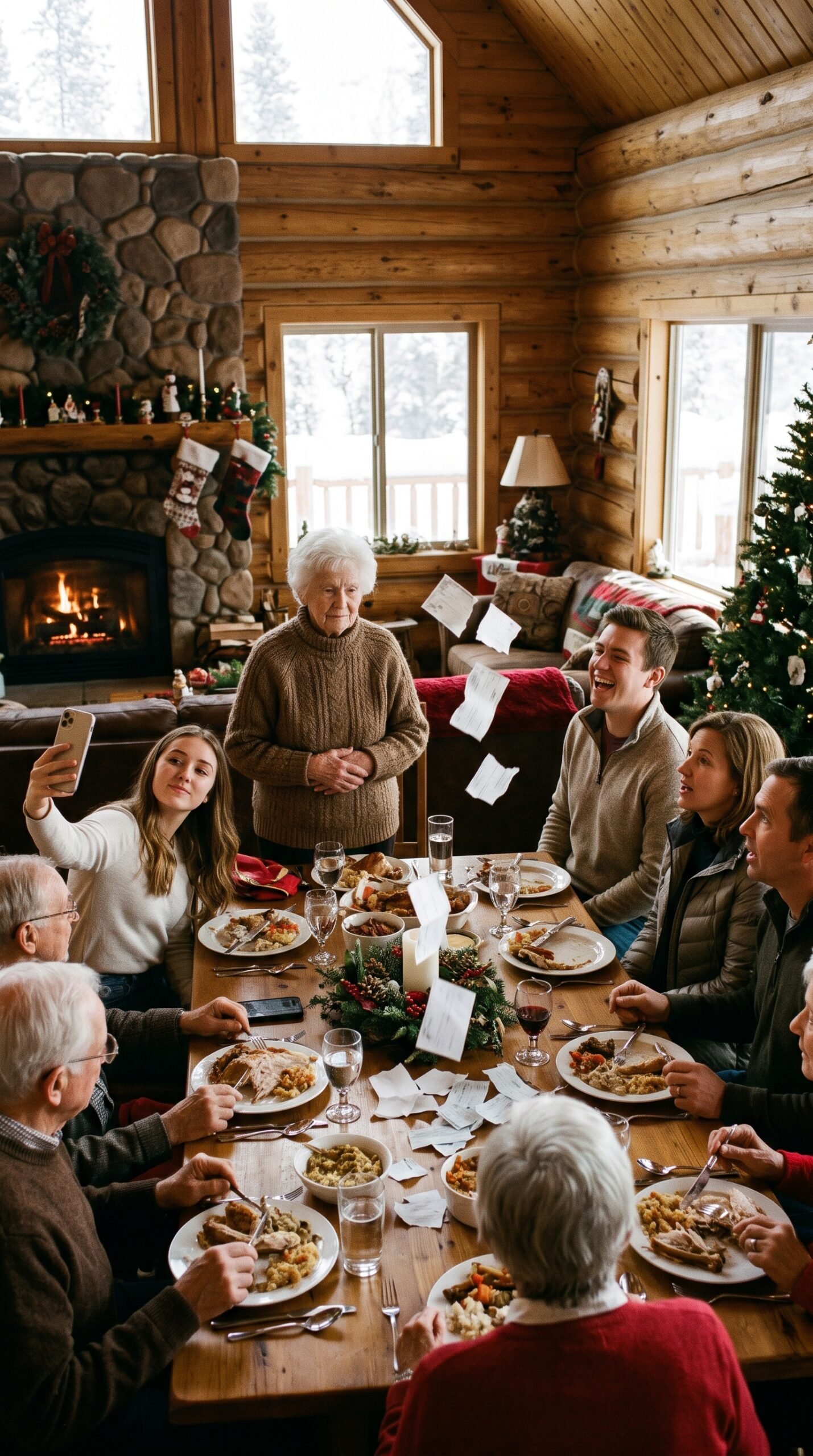
The Christmas envelopes had been a test, and Grandma had known exactly what she was doing. She gave each of us an identical check for six million dollars, which was real money but a small fraction of her estate. She wanted to see who would treat it, and her, with respect. My father tore his up. Eric laughed. Olivia posted it. My uncle and aunt had left theirs behind in the trash.
“She told me that the checks were valid,” Ms. Lindqvist said, “and that anyone who deposited theirs would receive it. But she also wrote a will, and it was signed three months ago. Each of them has been left exactly what they treated as a joke. The check, and nothing more.”
I stared at her. “And the rest?”
“A trust. Most of it will fund a rural hospice and a scholarship for first-generation students in Wyoming. Your grandmother named it after your grandfather. And there’s a smaller provision for you, which she’d like to tell you about herself.”
That evening, Grandma asked me to sit by the fire. She had insisted on getting out of bed, wrapped in Grandpa’s wool mittens and her brown sweater.
“I’m leaving you this cabin,” she said. “The land, and the ridge, and whatever is in the account that Ms. Lindqvist has told you about. It isn’t for the money. I want somebody here who knows the sound of my engine.”
“Grandma, it’s your sound. I’m the one with the engine.”
She laughed, and the laugh turned into a cough, and I held her until it passed.
“Don’t sell it to a developer,” she said.
“I won’t.”
“And deposit that check. Use it to fix the roof. It’s been leaking for years and none of them ever asked.”
I did not know what to say, so I said the only true thing. “I’d have stayed without it.”
“I know,” she said. “That’s why it’s yours.”
She died on a quiet morning in February, with snow against the windows and the fire still burning from the night before. I was holding her hand. The nurse said she’d slept most of the night. I had been awake, listening to her breathe, and when it stopped, I did not call anyone for a long time. I just sat there and told her everything I had never said, about the hinge and the pie and the porch, and how I had always known she was waiting.
The funeral was small, and then it wasn’t, because the whole town came. Ranchers in good coats. Nurses from the Billings clinic. A line of former students she had tutored at the kitchen table decades earlier, who had never forgotten her. My father arrived late and stood at the back. When the will was read a week later, I watched his face as Ms. Lindqvist explained it. He did not shout. He looked at the torn pieces of paper he had somehow kept in his coat pocket, and he said nothing at all.
Eric called me that night. He wanted to know if the checks were still good. I told him they had been valid, and that Grandma had given him exactly what she’d intended. He called me a name and hung up. Olivia deleted her post. Uncle Martin sent a stiff letter asking about the furniture, and I mailed him her teapot, because it seemed to be what he wanted most.
I took the leave of absence from school and stayed through the spring. I fixed the roof myself, with the contractor’s help, and I deposited the check. Then I donated nearly half of it to the hospice that had cared for her.
In May, I stood on the porch at dusk, listening. Down the valley, a truck was grinding up the ridge road. For a second, my heart leapt, the way hers must have every winter.
It was only Walt, bringing over a basket of eggs.
“She’d have liked you here,” he said.
I looked out at the snow melting off the pines, the greenhouse glass catching the last light, the chairs by the fireplace still pulled close.
“I’m not here for her anymore,” I said. “I’m here because she taught me what home sounds like.”
And every winter after that, when the first car came up the road, I stood on the porch and waited.