I pulled out a chair and sat down. Michelle had not said a word. She stood by the stove with her arms wrapped around herself, looking at my kitchen like she had never seen it before.
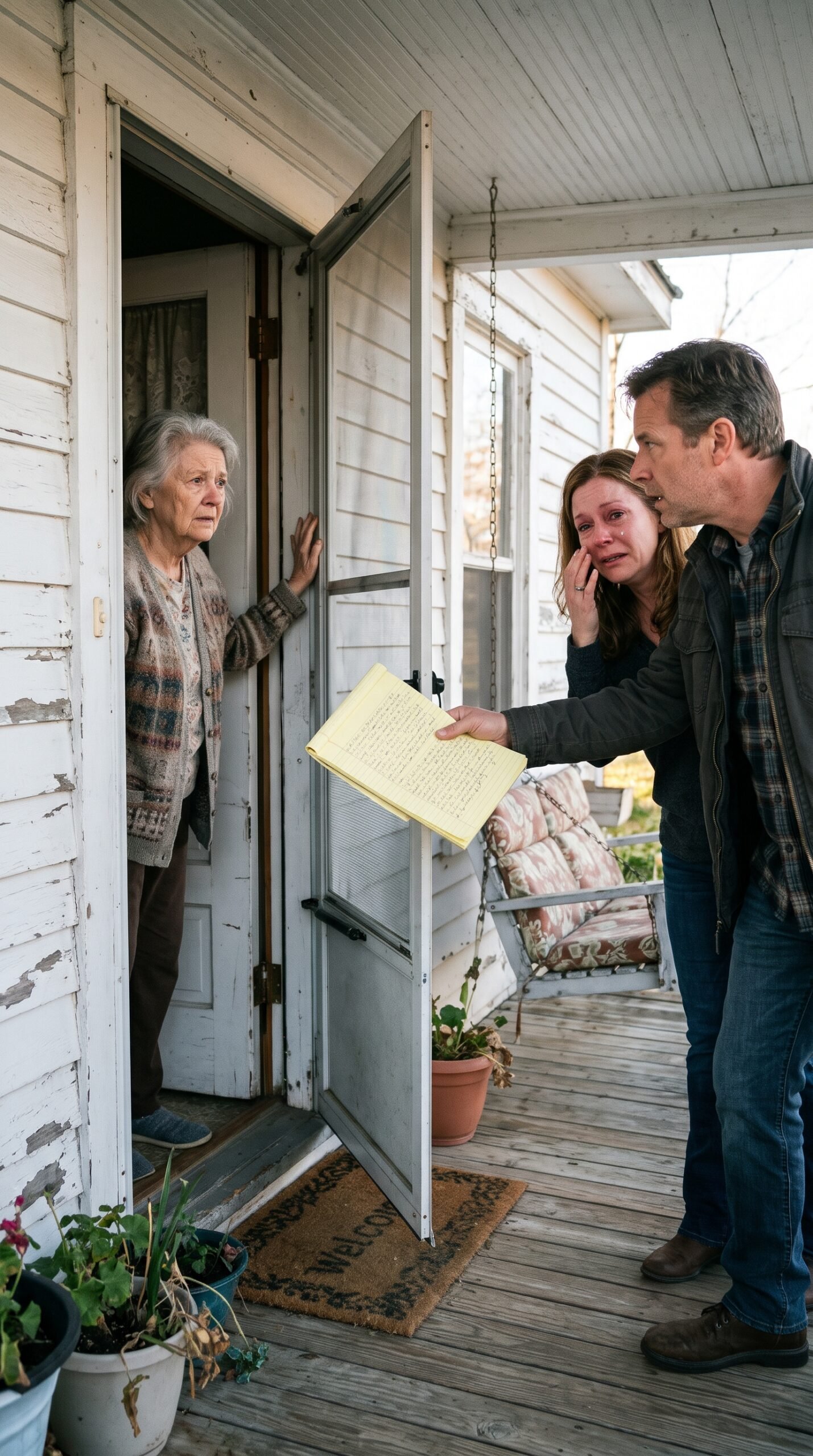
The legal pad was covered in columns. Todd’s blocky handwriting ran down the left side: Mortgage. Property tax. Car payment. Daycare. Michelle’s student loan. Credit card. On the right, a total that made my stomach drop.
“We’re underwater, Judy,” he said. “Have been for two years. I got laid off for four months in the spring of last year. I told Michelle I’d handle it. I didn’t. I took out a loan to cover the gap, then another to cover the first one.”
“Todd,” Michelle whispered.
“No. She needs to hear all of it.” He rubbed his face. “That $800 wasn’t about rent. It was about us staying afloat. I figured if your Social Security came in every month, we could make the payments. And I told myself it was fine because you’d have a room, and family around you.”
“A room in the underneath,” I said quietly.
He winced. “I knew what that basement was. I’d been telling myself it was temporary. I couldn’t look at you when you asked to see it again because I knew you’d see through me.”
Michelle finally spoke. “Mom, I didn’t know it was this bad until last week. I found the collection notices in his truck.” Her voice cracked. “But I also didn’t stop him. When he said eight hundred, I did the math and thought, that could work. I never asked what it would cost you.”
I looked at my daughter. She was thirty-six years old, but at that moment she looked about twelve, the way she did when she’d broken something and was waiting to find out how bad it was.
“Why didn’t you just tell me?” I asked. “I worked at that lumberyard for twenty-two years. I know what it looks like when the numbers don’t add up.”
“Because you’d just lost Dad,” she said. “And because I was ashamed. You and Dad never owed anybody a dime.”
That was true. Dale used to say a man could survive almost anything except owing more than he could pay. But Dale had also once borrowed against the truck to keep a neighbor’s roof from collapsing, and he never regretted it. Pride and help were never as far apart as people pretended.
“Here’s what I’m going to say,” I told them. “And I want you both to listen.”
Todd straightened. Michelle wiped her eyes.
“I’m not moving into your basement. That part is settled. This house is mine, and the porch swing is mine, and I plan to sit on it until I’m too old to climb one step.” I tapped the legal pad. “But I’m not going to sit here and watch you drown, either. You’re my family. You came here tonight with the truth, and that’s worth more than any rent money.”
Michelle started crying again, quietly.
“So tomorrow,” I continued, “I’m going to sit down with you both, and we are going to go through every line of this pad. I’ve dealt with enough overdue accounts to know that most people never ask for help early enough. Creditors will talk to you if you call first. Some of this can be consolidated. Some can be negotiated. And a few of these cards, Todd, need to be cut up.”
He laughed, a short, broken sound. “Yes, ma’am.”
“I can’t give you eight hundred dollars a month. But I can give you my time, and my experience, and Sunday dinner. And if things are truly desperate, I can help with the grocery bill. A little. Not as a payment. As your mother.”
Michelle crossed the kitchen and wrapped her arms around me. She smelled like laundry soap and tears, and I held her the way I had when she was small and the thunder frightened her.
“I’m sorry,” she said into my shoulder. “I’m so sorry I hung up on you.”
“I know, honey.”
“I missed you. The kids missed you. Sadie keeps asking when Grandma’s coming back to the swing.”
That was when I almost lost my own composure.
We sat at the table for three hours that night. I made coffee. I found an old calculator in a drawer, one Dale used for farm accounts, and we worked through every number. By midnight, we had a plan. Todd would call the lender first thing Monday and request a hardship modification. Michelle would pick up extra shifts at the clinic, and Todd would take overtime at the plant. They would sell the second car, which had been costing them more than it was worth. And they would meet with the credit counselor at the church, the one who had helped half the town sort out their debts.
It was not a miracle. Nothing is. But for the first time in a long while, the numbers had a shape, and a shape can be managed.
The following months were hard. There were missed dinners and tight weeks and one tense Sunday when Todd snapped about the grocery list and then apologized before he’d even left the room. But the modification came through in January. By spring, the collection calls had stopped. Michelle started painting again, something she’d given up after the baby.
I kept my small house. I planted tomatoes along the fence and hung Dale’s old wind chime beside the porch swing. Mr. Brandt stopped by every few weeks to ask if the roof was holding, and I started bringing him banana bread, which he pretended not to like.
One evening in June, Sadie climbed onto the swing beside me, her legs dangling, a stuffed rabbit in her lap.
“Grandma, are you still going to sleep in the underneath?”
I laughed and pulled her close. “No, sweetheart. I sleep right here, in my own little house. And whenever you want, you can sleep over.”
“Really?”
“Really. You can even have your own key.”
Her eyes widened. “A real one?”
“A real one.”
The next morning, I took the spare key off the metal ring, tied a bit of yellow ribbon through it, and pressed it into her small hand.
She held it like treasure.
And I understood something Dale had known all along. A home isn’t the place that takes you in because you have nowhere else to go. It’s the place where the door opens because you chose it, and the people you love walk through it by choice, too.