“We never wanted anyone to find out,” Caleb said, his voice breaking. “Nora isn’t the problem. I am.”
I gripped the doorframe. Behind me, my mother had stopped calling my name and was holding my elbow, steadying me.
“Tell me,” I said.
He stayed on his knees on our parents’ porch, tears running into his collar. “Two years ago, before the fertility treatments, I had genetic testing done. Without telling you. The clinic said we had a very low chance of conceiving, and I was terrified you’d leave me if you knew it was my fault.”
“Caleb, that’s not…”
“Let me finish.” He wiped his face. “The doctor called me back with a result. I carry a rare hereditary condition. It’s passed down through my father’s side. If a child inherits it, she’d have a serious heart defect that shows up in the first weeks of life. It can be treated if it’s caught immediately, but if it isn’t…” He couldn’t finish.
Margaret spoke, her voice thin and cracked. “My husband died of it at thirty-four. We thought it had skipped Caleb. It hadn’t.”
I stared at them. “You knew? Both of you? And you let me try for six years?”
“I didn’t tell you because I was sure we’d never conceive,” Caleb said. “The doctors said the odds were almost nothing. And when you got pregnant, I panicked. I couldn’t tell you then. You were so happy.”
“So you stayed silent, and when Nora was born, you said she wasn’t the baby you wanted.”
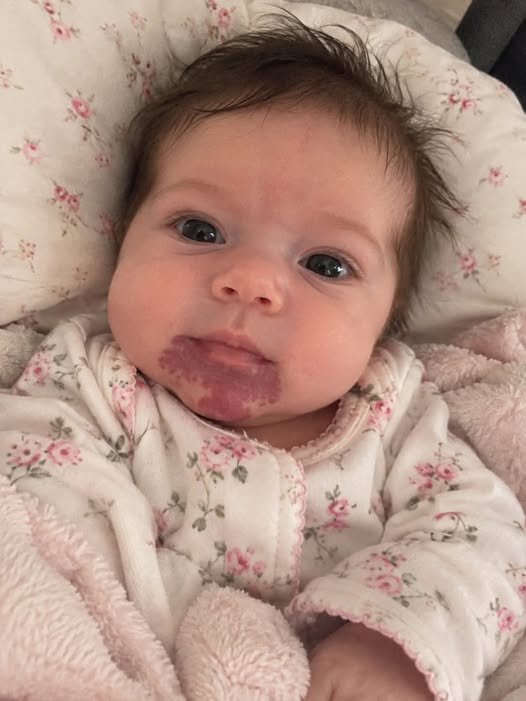
“That’s not what I meant.” His voice shattered. “When I looked at her, I saw my father’s face in her hospital photos. Her lips had a slight bluish tint. I knew. I knew right then, and I couldn’t breathe.”
My stomach turned over. I thought of Nora’s tiny fingers around mine, her color a little dusky when she cried, a nurse mentioning it was probably normal.
“Why didn’t you tell the doctors?” I whispered.
“I was a coward.” He looked up at me. “I thought if I pushed you away, you’d take her somewhere safe, and I wouldn’t have to watch it happen. I thought I was protecting you from what I’d done. That’s the lie I told myself when I threw your things in the street.”
“You abandoned your wife and newborn because you were ashamed.”
“Yes.”
“And your mother stood there and watched.”
“I was frozen,” Margaret said. “I watched my husband die when Caleb was nine. I couldn’t do it again.”
Rage and terror pulled at me from both sides. I had a daughter who might be sick, and the two people who knew the truth had wasted three days.
“Where is she?” Mom asked sharply. “Where’s Nora?”
“Inside,” I said, already turning. “Asleep in the bassinet.”
I ran. The baby was breathing evenly, her face pink in the afternoon light. I lifted her gently and checked her lips, her nail beds, her toes. A faint blue shadow. I had mistaken it for the cold.
“Mom, get the car keys,” I said.
Caleb drove, because his hands were the steadiest of any of ours, and because I wanted him there. I held Nora against my chest in the back seat while Margaret sat silently beside me, her handkerchief pressed to her mouth.
At the children’s hospital, a nurse took one look at Nora and carried her straight through the double doors. We waited in a hallway that smelled of disinfectant while monitors beeped behind a curtain.
A cardiologist named Dr. Patel emerged forty minutes later, still wearing her gloves.
“Mrs. Brennan?” she said to me. “Your daughter has a condition called coarctation of the aorta with a small hole in her heart wall. It restricts blood flow to the body. It’s serious, but it was caught in time. If she’d gone home with you tomorrow, I wouldn’t have been able to say that.”
My knees buckled, and Caleb caught me before I hit the floor. For a moment, neither of us pulled away.
“Will she live?” I asked.
“She’ll need surgery this week,” Dr. Patel said. “A team here does this procedure every day, and the outcomes for infants her age are very good. I expect a full recovery.”
I nodded, unable to speak. Caleb sat down on the bench and put his face in his hands, shaking.
The surgery lasted four hours. I paced the waiting room until my feet ached. Caleb sat by the window the entire time, not speaking, not eating. At one point Margaret quietly gave him a sandwich, and he held it without taking a bite.
When the surgeon came out smiling, I sobbed.
Nora spent eight days in the cardiac unit. I slept in a chair beside her incubator, and on the third night, I woke to find Caleb standing at the glass, watching her breathe.
“I can’t ask you to forgive me,” he said without turning. “I’ve been rehearsing apologies for days. None of them are enough.”
“No,” I agreed. “They aren’t.”
“I’ll sign whatever you want. Divorce papers, custody, all of it. I’ll stay away. I just needed her to be okay.”
I looked at him, the man I’d loved for nine years, hollowed out and gray.
“Here’s what I need,” I said. “I need you to understand that the worst moment of my life wasn’t when you called her a disappointment. It was when I realized you’d carried this alone for two years, and you chose to let me find out from the cruelest possible version of it. If you’d told me, we could have prepared. We could have had a cardiologist waiting in the delivery room.”
“I know.”
“You didn’t trust me.”
“I didn’t trust myself.” His voice cracked. “I thought I was a danger to you both.”
“You were. Because you stayed silent.”
He nodded, tears falling.
We separated for a year. I lived with my parents, and Caleb lived in a small apartment near the hospital. He went to therapy twice a week. He attended Nora’s follow-up appointments and held her hand during every scan. He took a genetic counseling course, and he gave a statement to his own doctors urging his extended family to be screened. Two cousins tested positive and began monitoring their health years earlier than he had.
Margaret came to my parents’ house alone one afternoon in the spring. She stood on the porch holding a small, hand-knit blanket in soft yellow.
“I made this for Nora,” she said. “And I owe you an apology. I should have spoken up the moment I saw her. I let fear make me cruel.”
I took the blanket and ran my thumb over the stitches. “Thank you for saying it.”
It wasn’t forgiveness, but it was a start.
On the day Nora turned one, Caleb arrived at the party with a small cake and a card in shaky handwriting. It read: I’m still learning how to be the man you and Nora deserve. Whenever you’re ready, I’ll be here. No pressure. Just love.
I read it twice. Then I looked at my daughter, who was babbling in her high chair with frosting on her chin and a faint scar peeking above her onesie, strong and bright-eyed.
“Come sit,” I told him.
He did.
A year later, he moved back home, slowly, with new rules. No secrets about health, money, or fear, ever. Every Sunday we sit at the kitchen table and tell each other one hard thing. Some days it’s small. Some days it isn’t.
Last week, Nora took her first wobbly steps across the living room. She walked straight into Caleb’s arms, and he lifted her high, laughing and crying at once.
I watched them, and thought of that doorstep, the trash bags, the words I’d never wanted to hear.
Sometimes the cruelest things are born from fear. And sometimes, with enough honesty and enough time, love finds its way back anyway.